



Where Tennessee Began
A three-day weekend can disappear in a puff of football, errands, and leaf-blower diplomacy. This October, Tennessee’s oldest stories offer a better reason to look up and pay attention.
Columbus Day and Indigenous Peoples’ Day share Monday, October 12, a pairing that invites a useful question: Whose history do we mean when we talk about Tennessee’s beginnings? The answer starts thousands of years before statehood, county lines, or anybody thought to name a boulevard for a politician.
In Nashville, the Tennessee State Museum places that long view front and center. Its First Peoples exhibition spans roughly 13,000 BCE to 1760 CE, following Indigenous communities as hunting and gathering lifeways developed into complex farming societies. One practical note for holiday planners: the museum is closed Mondays. Save the visit for Saturday and Sunday, when there is time to learn rather than speed-read several millennia before lunch.
The Landscape Keeps the Record, Too
West of Nashville, Pinson Mounds State Archaeological Park preserves a major prehistoric Native American mound complex. In Manchester, the Old Stone Fort State Archaeological Park provides context for another significant Indigenous archaeological landscape,. These are not quaint preludes to the “real” Tennessee story. They are evidence that organized communities, engineering, ceremony, and relationships to the land were here long before European settlement.
Farther east in Vonore, the Sequoyah Birthplace Museum has served as an educational resource on Cherokee heritage since 1986. Its exhibits and preserved artifacts center Sequoyah’s legacy and Cherokee history, connecting a name many Tennesseans recognize with the person and culture behind it.
History With a Pulse
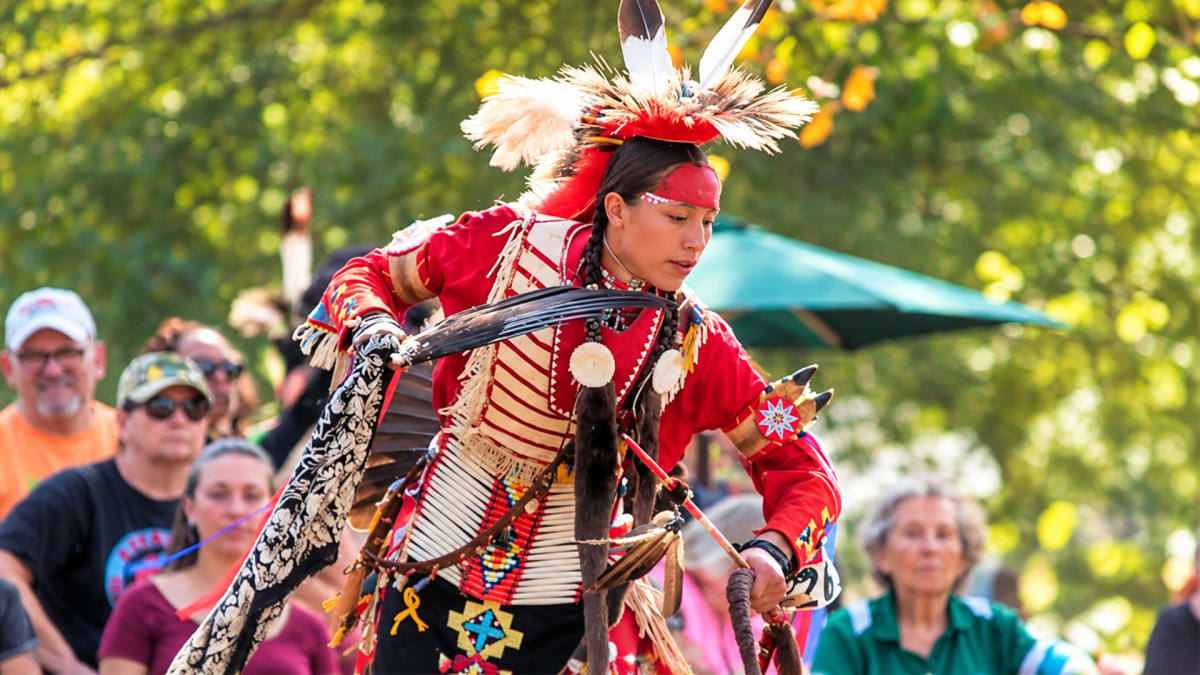
The story does not stop behind glass or beneath an interpretive marker. The Nashville-based Native American Indian Association of Tennessee connects visitors with Native communities living in Tennessee today. Its annual Tennessee Indian Education Pow Wow runs October 16 through 18 at Long Hunter State Park, just days after the holiday. Gates open at 9 a.m.; admission is cash only. Native dancing, drumming, arts, crafts, food, and ceremonial traditions fill the weekend, with etiquette guidance posted for first-time guests. Respect, as ever, travels better than assumptions.
That is the worthwhile use of October 12: not checking a cultural box, but beginning a longer acquaintance with the people, places, and living traditions that shaped Tennessee and still do.
Find more museums to explore in the Guide to Tennessee museums directory: https://www.guidetotennessee.com/museums.
