



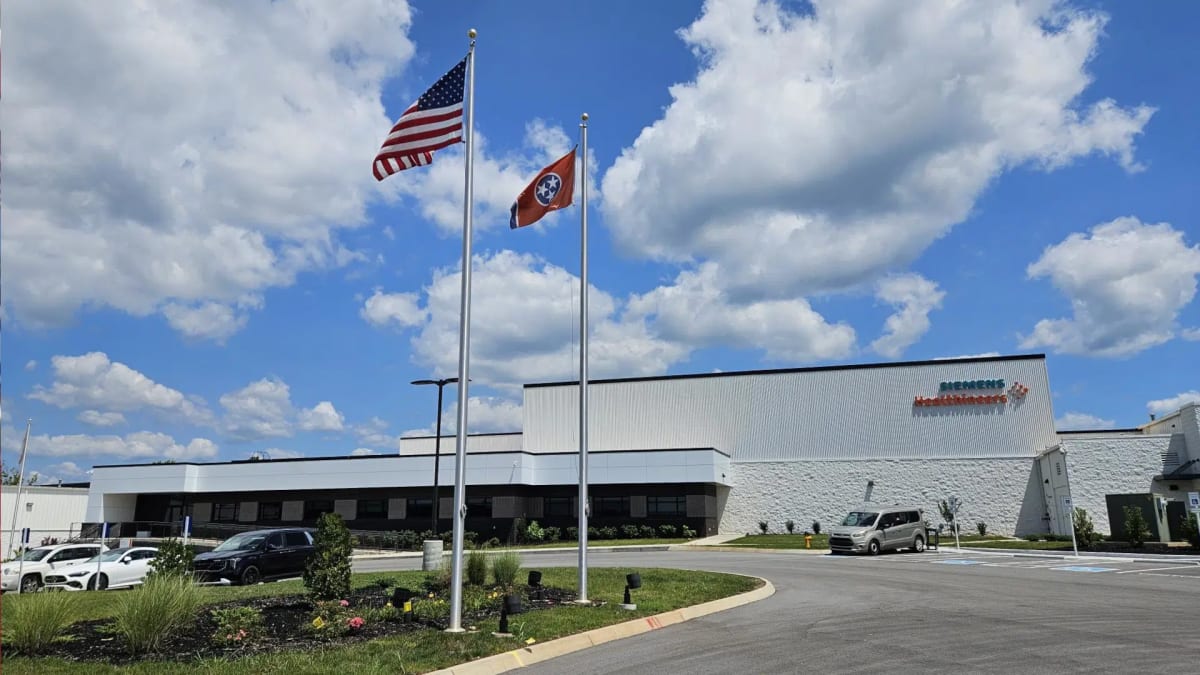
Rockford’s $43.6 Million Close-Up!
A hospital scanner gets the attention. The parts inside it rarely get so much as a thank-you. In Rockford, those largely invisible components are the reason a $43.6 million investment deserves a closer look.
Siemens Healthineers’ Rockford expansion adds manufacturing capacity and research space to its PET Detector Center in Blount County. More than 90 manufacturing, research and development, and management jobs are expected over five years. The campus already employs more than 200 people.
Here is what those workers help make: detectors for PET/CT scanners, equipment clinicians use to examine metabolic activity and investigate diseases including cancer, Alzheimer’s and cardiac conditions. Rockford is the company’s sole manufacturing site worldwide for these PET detectors. That gives this small East Tennessee community a specific responsibility in a global healthcare supply chain.
The work begins well before a patient enters an imaging room. The campus includes a crystal-manufacturing facility on Stock Creek Boulevard, alongside detector manufacturing, engineering and research facilities on Dunavant Drive. Siemens describes its detector production as an in-house process in which crystals are grown, cut and individually selected. Owning those steps allows the company to monitor quality and ensure components meet precise specifications.
These crystals have a demanding assignment. In the company’s digital LSO-based detectors, crystal signals are converted into digital signals by specialized electronics. Crystal size, light output and timing response all influence imaging performance. This is manufacturing where the details inside the component matter to the details a clinician can eventually distinguish.
Once installed in a scanner, the detectors capture gamma rays associated with a radiopharmaceutical administered to the patient. The scanner translates those signals into images. Molecular imaging gives clinicians information about biological activity, making the detector a link between Tennessee production work and medical decisions made elsewhere.
The completed project added 40,000 square feet and renovated another 7,500. The crystal facility was outside the construction scope; the investment concentrates on additional manufacturing capacity and expanded research space. Siemens says that capacity will support growing demand and new PET/CT product lines in the United States and abroad.
For local readers, the significance is the combination of work under one operation: materials production, engineering, research and manufacturing. A detector’s trip to a hospital begins with people in Rockford getting those steps right. The component stays out of sight. Its usefulness certainly does not.
Find Tennessee medical supply and service providers through the Guide to Tennessee directory: https://www.guidetotennessee.com/medical-supply-services
