



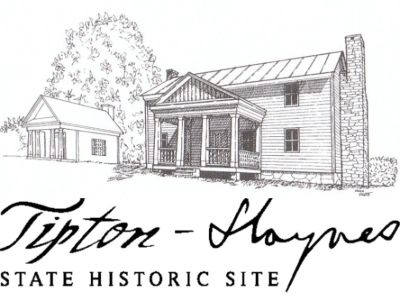
Tipton-Haynes State Historic Site
- 2620 S Roan St, Johnson City, Tennessee, 37601
- Send Message
- 423-926-3631
Contact Information
Johnson City, Tennessee, 37601
United States
Company Details
About
The Tipton-Haynes Historical Association Inc., in agreement with the Tennessee Historical Commission, operates the Tipton-Haynes State Historic Site located in Johnson City, Tennessee. The overall mission of the Historical Association Inc. is to act as “a non-profit organization, preserves, protects, and perpetuates the historic grounds, buildings and artifacts of the Tipton-Haynes State Historic Site and provides education experiences and research opportunities to the public based on the comprehensive history of the site.” Known as "Tennessee's Most Historic Site,” history represented at Tipton-Haynes spans from the Pleistocene Period to the countercultural decade (1960s). Primarily this history focuses on the Tipton (1780s-1830s), Haynes (1840s-1860s), and Simerly (1880s-1960s) families which resided in the main historic home on site. Our Tipton and Haynes families were vastly influential in regional, state, and national politics during the Revolutionary and Civil War eras.
Colonel John Tipton was a veteran of Lord Dunmore’s War in 1774- a campaign waged by the colony of Virginia against the Shawnee Indians that resulted in the westward expansion of Virginia’s boundaries. Tipton also served in the American forces during the Revolutionary War as a recruiting officer for the Virginia Militia and Continental Army. He represented Dunmore County, VA, now Shenandoah County, in the Fifth Virginia Convention in Williamsburg which declared Virginia independent from Great Britain. When Tipton moved onto the property in 1783, at the time western North Carolina, he built a one and a half story cabin which is now enclosed by future additions to the home.
Landon Carter Haynes, a prominent lawyer before the Civil War, was elected a Confederate Senator after a series of successful pro-secession speeches across East Tennessee. During his time in the Confederate Congress, he served on several committees including Patents, Post Offices and Post Roads, and Judiciary. In the early days of the war, the Haynes family resided in Knoxville, Tennessee, where Landon helped to defend the town during a Federal raid in June 1863. Following the raid, the family relocated to Wytheville, Virginia, before eventually moving to Statesville, North Carolina by the end of the war. The war would end for the Haynes family in Statesville, with Landon traveling to nearby Salisbury to take the oath of allegiance to the United States in spring 1865. It would ultimately take Landon a full year to receive a presidential pardon from his once political enemy, President Andrew Johnson, and in the aftermath, he made his home in Memphis, where he once again opened a law practice.
After the Civil War, Landon’s niece, Sarah Simerly and her two sons Samuel and Lawson, moved into the home as our last private residents. Sarah lived in the home until her passing in 1935. In 1944, the Tennessee Historical Commission acquired the property, though the two brothers continued to live there until their deaths in 1962.
Operating year round, the Tipton-Haynes State Historic Site, a National Historic Landmark, is home to 48 acres, eleven historic buildings, the Tipton/Gifford/Simerly cemetery, a nature trail, a natural spring, a limestone cave, the Penny McLaughlin Museum and Education Center home to a permanent exhibit, the Taylor Library, gift shop, conference room, and Mary Hardin McCown Archives.
Its mission is fulfilled through numerous avenues. During operation, the site has hourly tours which focus on site history. For visitors that do not opt for a guided tour, educational panels span the site for a self-guided walk that informs visitors about site history. During the school year, the site also provides field trips to local school systems and homeschool co-ops throughout northeast Tennessee, southwest Virginia, and northwest North Carolina. Artifacts are displayed in historic buildings, the site exhibit, and in the archives. Staff are also doing more in-depth research into the site’s history to continue its pursuit into interpreting the site’s history at its full capacity.
