



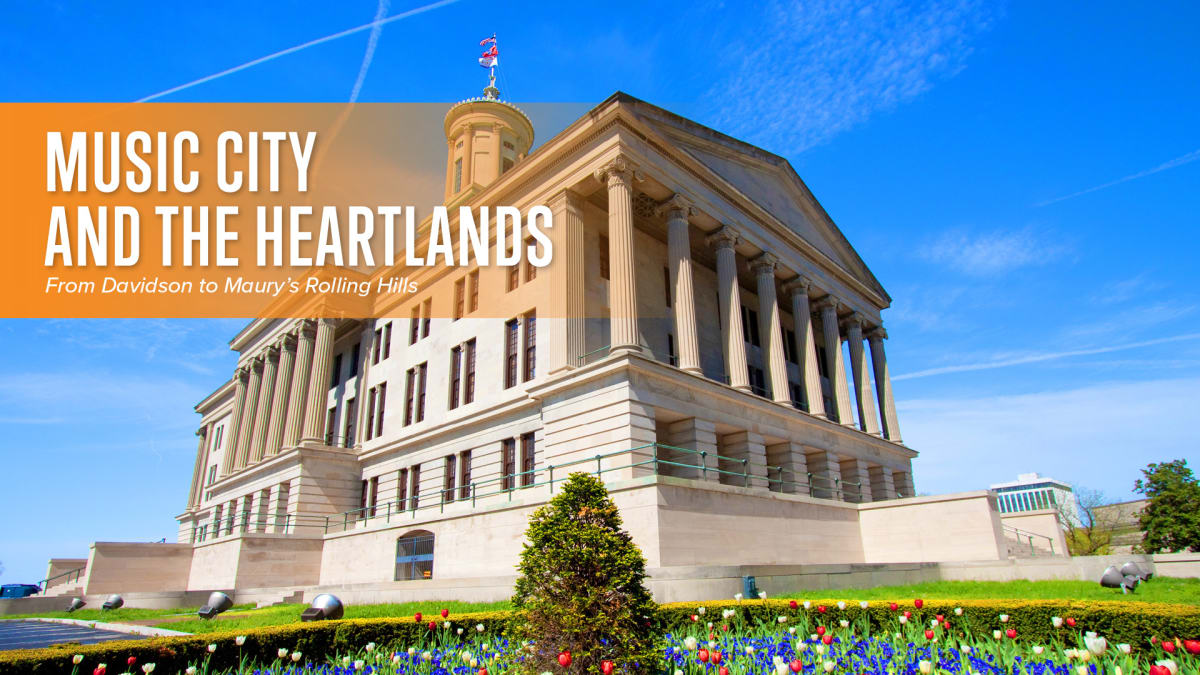
Music City & The Heartland
In Middle Tennessee, the pulse of the state beats loudest—and not just on stage at the legendary Ryman venue. Nashville might be the headline act, but this region is more than rhinestones and record deals. Music City leads with healthcare, finance, and a booming tech sector, anchored by giants like HCA Healthcare and Oracle’s $1.35 billion riverfront campus underway at the Nashville Yards. Meanwhile, the Grand Ole Opry, Ryman Auditorium, and Country Music Hall of Fame help power a multibillion tourism industry in Davidson County alone. In 2023, this tourism generated a record $10.77 billion in direct visitor spending, a soaring 8% increase from 2022.
But just beyond the skyline, the rhythm changes. In Franklin, Carnton and the Carter House tell the haunting story of the Battle of Franklin—one of the Civil War’s deadliest. And south in Maury County, once the “Mule Capital of the World,” the Middle Tennessee Livestock Market still offers over 155,000 square feet of space—probably enough room for every cow in the county and then some.
Agriculture still shapes the land across Robertson and Dickson counties, where soybeans, corn, and cattle stretch over thousands of acres. And thanks to fertile soil and a deep-rooted horticultural legacy, Warren County, the “Nursery Capital of the World,” boasts one of our nation’s largest nursery industries.
Beyond the boardrooms and barns, small towns like Columbia and Springfield are reimagining their downtowns, blending historic charm with coffee shops, breweries, and boutiques. Vineyards in Arrington, co-owned by country music artist Kix Brooks, bring the party to “Wine Country,” and orchards near White Bluff prove that the Heartland still knows how to grow.
This is where skyscrapers meet siloed fields, where the past isn’t just remembered—it’s part of the daily landscape. In Music City and the Heartland, the beat goes on, grounded in heritage but always stepping forward.
