



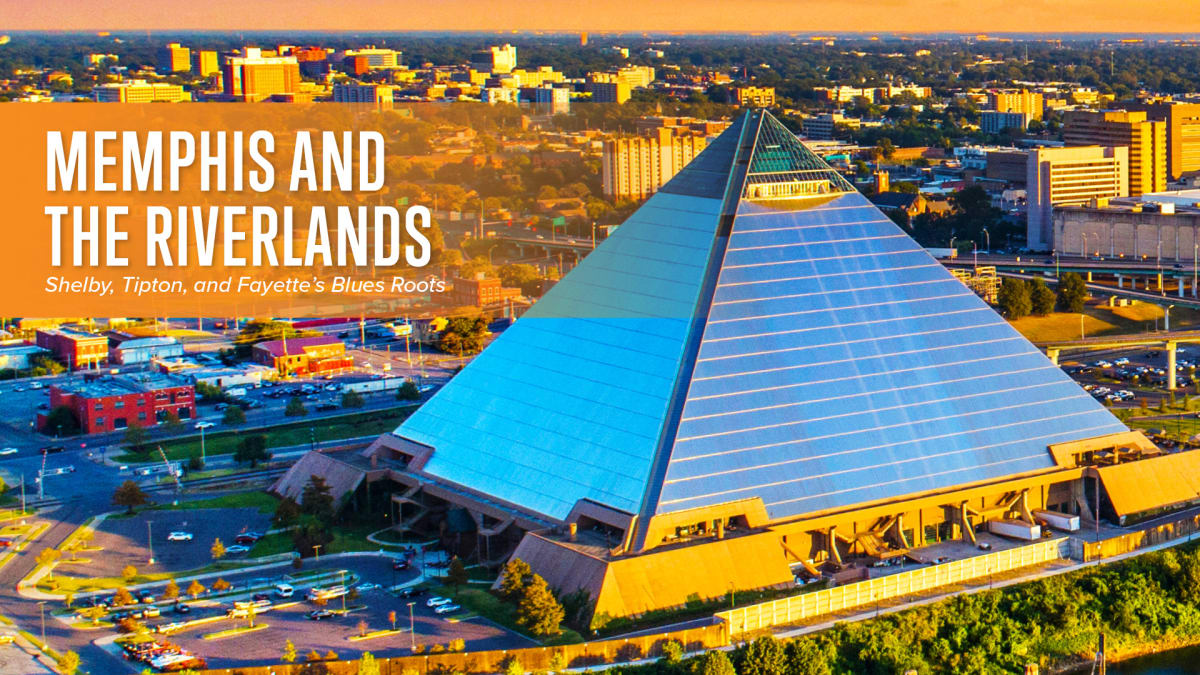
Memphis & The Riverlands
There’s something about Memphis that just moves. Maybe it’s the Mississippi River carving its way through the city. Maybe it’s the echo of a Sun Studio guitar riff or the deep, steady thump of FedEx jets overhead. Either way, this region doesn’t just carry cultural weight—it throws it.
Memphis is where American music got its swagger. Beale Street still hums with live blues and Graceland welcomes over half a million Elvis fans a year, making it the second most visited private home in the U.S.
But this isn’t just a history lesson. FedEx’s global headquarters, based at Memphis International Airport—one of the busiest cargo airports on Earth—keeps the economy moving, literally. In 2022 alone, the airport handled more than 8.9 million pounds of cargo. Add in International Paper, AutoZone, and St. Jude Children’s Research Hospital, and you’ve got a city that runs on more than rhythm and blues.
Still, the past is never far behind. The National Civil Rights Museum at the Lorraine Motel honors the life and legacy of Dr. Martin Luther King Jr. while serving as a powerful site of reflection and education.
Just outside the city, the land levels out into some of the richest farmland in the South. Fayette, Tipton, and Lauderdale counties continue to grow premium cotton, soybeans, and rice. Catfish ponds dot the landscape, while the Hatchie National Wildlife Refuge offers prime birdwatching, fishing, and the kind of stillness that’s hard to find in the city.
In the Riverlands, culture, commerce, and cotton all roll along the same current. One minute it’s boxes and blues, the next it’s freight and farmland. Either way, this region doesn’t just reflect the South—it defines it.
